
Loading...
Serving Duluth, MN and surrounding areas. (218) 514-1277
Menu
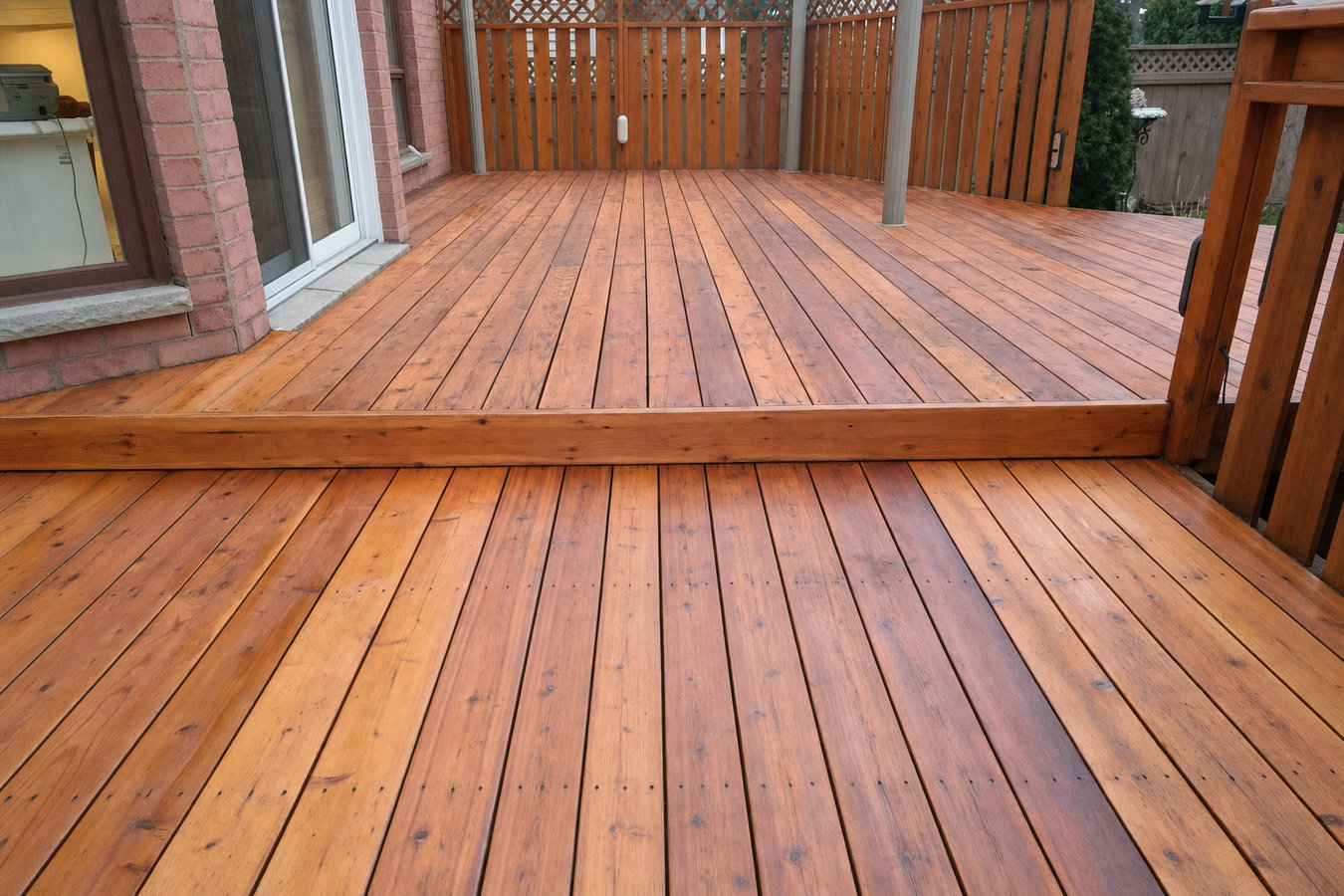
Duluth winters are hard on unprotected wood. Proper staining and sealing keeps your deck solid, smooth, and ready to use - season after season.
Deck staining and sealing in Duluth means cleaning the surface thoroughly, letting the wood dry completely, and applying the right product for a northern climate - most decks need this every two to three years, and most jobs take one to two days of active work.
Duluth sits at the western tip of Lake Superior and experiences more than 130 freeze-thaw cycles per year. Every one of those cycles pushes moisture in and out of unprotected wood, slowly cracking and weakening the boards from the inside. Staining and sealing is not cosmetic work - it is structural protection. Skipping it for a season or two in this climate is what turns a maintenance job into a deck repair and replacement project.
The difference between a job that lasts and one that peels within a season comes down to preparation. The wood has to be clean, dry, and free of old failing finish before any product goes on. We check moisture levels in the boards before we open a can - not just the weather forecast.
Pour a small cup of water onto the deck boards. If it beads up, the seal is still working. If it soaks straight into the wood within seconds, the protective barrier is gone. In Duluth's wet springs and heavy winters, boards absorbing moisture with every rain are headed for cracking and rot.
When deck boards lose their color and go flat gray, the surface protection has been stripped away by UV and weather. Duluth's freeze-thaw cycles and lake-effect moisture accelerate this graying. Gray wood is not ruined - it can often be cleaned and restored - but it signals the treatment schedule has slipped.
Run your hand along the boards. If the surface feels rough, splintery, or you can see small cracks forming, the wood has dried out and begun to break down. This is especially common after a Duluth winter. Catching it at this stage - before cracks go deep - means cleaning and staining can still turn things around.
Patches of stain lifting off the surface in chips means the previous application has failed and is no longer protecting the wood. Peeling stain is also a sign the original job may have been applied on wet wood or without proper prep. All failing material must come off before new product can bond properly.
Every deck staining and sealing job starts with preparation - cleaning the surface of dirt, mildew, and old failing finish, sanding rough spots, and checking the moisture level of the wood before anything else happens. This prep phase is what separates a job that holds up for two to three years from one that starts peeling within a season. If boards are soft, cracked, or rotting, we flag them for deck repair and replacement before staining makes sense.
For the stain itself, we match the product to the condition of your wood and the exposure your deck gets. Transparent stains suit newer wood in good shape; semi-transparent adds color while keeping the grain visible; solid stains cover older or rougher surfaces. We also handle pool deck construction projects that need a surface finish capable of standing up to both pool water and Duluth winters. Whatever the application, we use products rated for northern climates - not the same formula you would find on a shelf in a milder region.
Every job, without exception - clean, dry wood is the foundation of a finish that lasts.
Best for newer decks in good condition where you want the natural wood grain to show through.
A good middle ground for decks with minor weathering that still have visible, attractive grain.
Suited for older or rougher wood where the grain has faded and full coverage gives the best result.
Creates a surface barrier against moisture - essential for any wood deck facing a Duluth winter.
Homeowners with elevated lots who need a crew experienced working safely on raised structures.
Duluth averages more than 130 freeze-thaw cycles per year. That means temperatures cross the freezing point and back again over 130 times - and every time that happens, moisture inside unprotected wood expands and contracts, tearing the fibers apart from the inside. Duluth decks deteriorate faster than decks in milder climates, and the gap between a protected and an unprotected deck is far more visible here after a single winter. The U.S. Forest Service Forest Products Laboratory documents how wood exposed to repeated freeze-thaw cycles degrades significantly faster than wood in stable climates - and Duluth's cycle count is among the highest in the continental U.S.
The application window here is also short. Stain and sealer need temperatures above 50 degrees and completely dry wood - and that window in Duluth runs roughly from late May through early September. Lake Superior keeps humidity elevated through spring and fall, which means wood stays damp longer than the forecast suggests. Booking early matters: the best slots fill in May and June, not in August.
We serve homeowners across the region, including Hermantown and Proctor. The same freeze-thaw conditions and short application window apply across the area, and we schedule jobs in each community throughout the season.
We respond within 1 business day. Tell us roughly how big the deck is, what it is made of, and when it was last stained if you know. No need to have all the answers - we ask the right questions.
We walk the deck and check the condition of the boards - looking for soft spots, deep cracks, failing finish, and how weathered the surface is. You get a written quote that breaks out prep, materials, and labor so you can compare fairly.
The crew pressure-washes or chemically cleans the deck, removing dirt, mildew, and old failing finish. The wood then dries fully - typically 24 to 48 hours - before anything is applied. We check moisture levels in the wood before moving on.
Once the surface is ready, we apply stain and sealer by brush and roller - getting into every gap and groove. Before leaving, we do a walkthrough with you and tell you exactly what product was used and when to plan the next treatment.
Free estimate, no obligation. We respond within 1 business day.
(218) 514-1277We use stains and sealers rated for cold-climate performance - not the same formulas sold in warmer markets. Products that cure at lower temperatures and resist freeze-thaw cycling are what Duluth decks actually need. Using the wrong product is why jobs fail early.
The single biggest reason staining jobs fail is inadequate prep. We clean the surface, check moisture levels in the wood, and confirm the deck is fully dry before applying anything. That discipline is what makes the difference between a finish that holds for two to three years and one that peels in a season.
A significant share of Duluth homes sit on steep hillside lots where decks are elevated well off the ground. Reaching all surfaces safely requires the right equipment and experience - which we have. Homeowners in neighborhoods along Duluth's upper ridge can expect the same quality on an elevated deck as on a ground-level one. The North American Deck and Railing Association sets the standards our team follows.
If the deck has boards that need replacing before staining makes sense, we tell you that upfront - not after the job starts. You know what the project includes, what it costs, and what to expect before you sign anything. No surprises on the bill.
Proper prep and the right product are not optional in Duluth - they are what separates a finish that survives winter from one that fails before spring. When you hire Duluth Fence & Deck, you get both.
Build a safe, properly drained surface around your pool that holds up through Duluth winters.
Learn MoreReplace rotted boards or failing structure before staining extends the life of what remains.
Learn MoreDuluth contractors fill their spring and summer calendars fast - lock in your date now before the best slots are gone.